
 16 MIN READ
 UPDATED OCT 30, 2026
💡 What this guide is for Annual leave can create an additional cost when employment ends if unused statutory entitlement is still outstanding. This guide helps admins understand what may need to be paid at termination, how far back an outstanding balance can reach, and what actions are required during employment where local law allows leave to expire.
The goal is to make sure leave is actively managed, employees have a genuine opportunity to use their entitlement, and balances are not unintentionally allowed to accumulate where local law provides a compliant expiry or carryover framework.
How to use this guide
Before approving or processing a termination:
- Check the employee's work country and, where noted, state/province/territory.
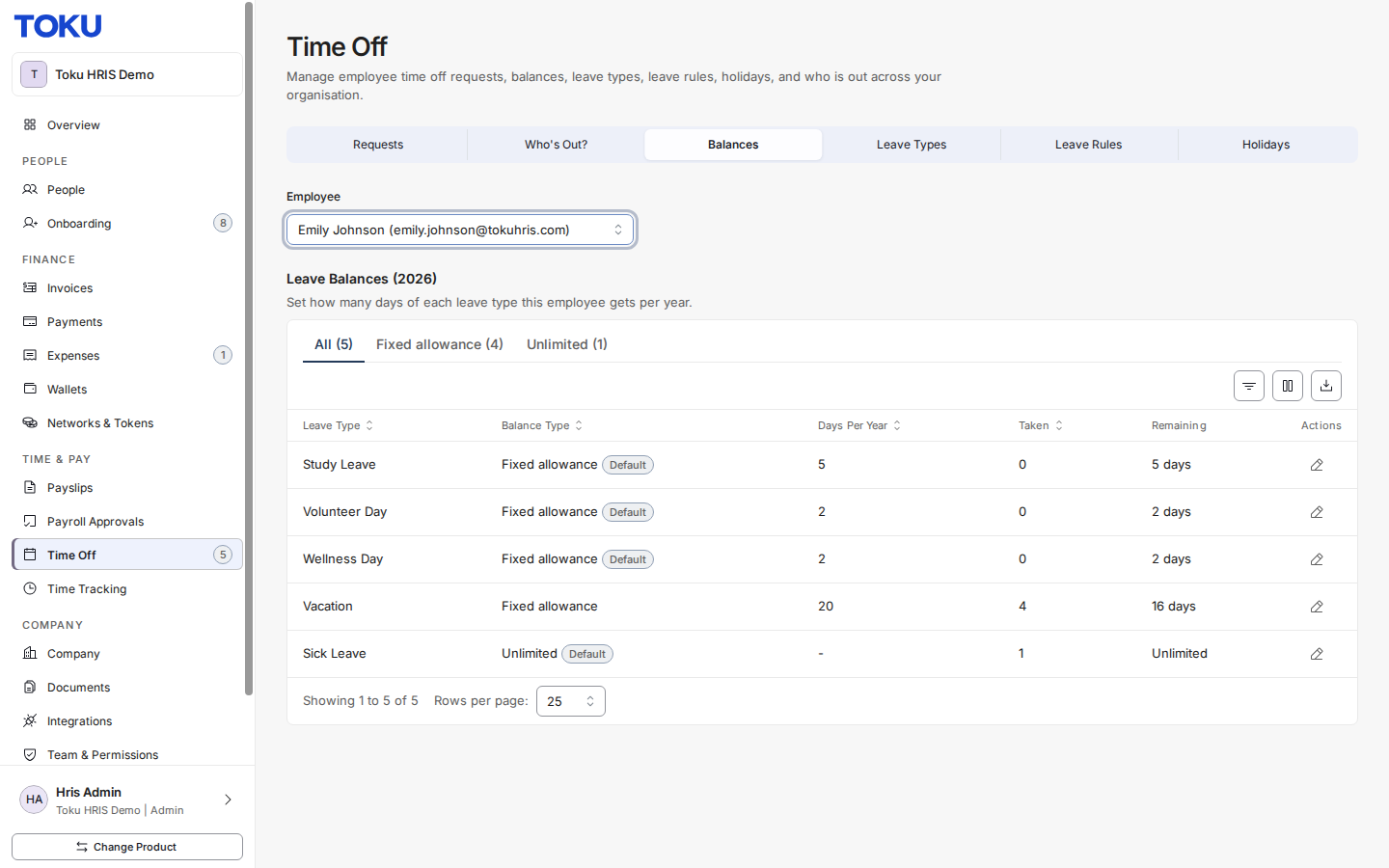
- Confirm the employee's current unused leave balance by leave year. Do not rely only on one combined PTO total.
- Identify whether the balance is statutory annual leave or additional contractual/company leave.
- Review the country's carryover/look-back rule below to determine which prior-year balances may still be legally outstanding.
- Ask Toku to confirm the termination calculation before communicating final amounts to the employee.
⚠️ Important: A balance showing in the HR system is not automatically payable, and a balance disappearing from the HR system does not automatically mean the legal entitlement expired. Expiry must comply with the applicable country's rules. In some countries, the employer must actively remind the employee, provide a real opportunity to take leave, and warn that unused leave will expire before forfeiture can be relied upon.
Countries with the highest potential accumulated-leave exposure
- Australia: unused statutory annual leave generally carries forward indefinitely and the outstanding balance is paid on termination.
- New Zealand: statutory annual holidays generally remain owing until taken or paid at termination; they do not simply disappear at calendar year-end.
- Israel: termination vacation redemption can extend through the current year plus the prior three years.
- Germany and several EU countries: leave may fail to expire if the employer did not actively enable the employee to take it and provide the required warning. Long-term sickness can also extend the normal carryover period.
- Brazil: failure to grant vacation within the statutory timing can increase the financial exposure, including circumstances where overdue vacation becomes payable at a higher amount.
- Japan: statutory annual leave expires after two years, and there is no general statutory rule requiring all unused leave to be cashed out solely because employment terminates. Contract and company policy therefore matter significantly.
- South Korea: a formal statutory leave-use-promotion process can materially affect whether compensation for unused leave is due. Informal reminders are not enough.
- United States, Canada and India: the answer can depend on the employee's state, province/territory, or state-level employment law. Toku must confirm the subnational rule.
Country-by-country admin guide
| Country | Potential termination payout | Carryover / look-back | What admins should do during employment |
|---|---|---|---|
| Argentina | Accrued/proportional statutory vacation can be due at termination. | Leave is intended to be taken within statutory scheduling periods; historic employer failure can create additional exposure. | Schedule statutory leave within the required windows and keep records showing it was granted/taken. Escalate any prior-year balance to Toku. |
| Armenia | Unused annual leave outstanding at termination is generally payable. | Carryover can create multi-year balances, particularly where leave could not lawfully be taken. | Track entitlement by year and actively schedule leave. Do not erase historic balances without Toku confirmation. |
| Australia | Yes. High exposure. All accumulated unused annual leave is generally paid at termination, including applicable leave loading. | Unused statutory annual leave carries forward year to year rather than expiring annually. | Actively manage high balances throughout employment. A year-end forfeiture policy cannot remove statutory accrued leave. |
| Austria | Outstanding leave can be compensated when employment ends. | Prior-year leave remains relevant while it has not become legally time-barred. | Keep balances separated by leave year and encourage timely leave use. Have Toku review older balances before relying on limitation. |
| Brazil | Yes. Potentially high exposure. Acquired and proportional vacation is generally payable, plus the statutory vacation premium. | Employees accrue vacation over 12 months and the employer then has a statutory period in which to grant it. Overdue vacation can create increased liability. | Do not allow acquired vacation to sit beyond the statutory granting period. Track accrual and concession periods separately and schedule leave proactively. |
| Bulgaria | Unused statutory leave that remains legally claimable is payable. | Expiry rules can create roughly multi-year exposure, and protected absences may extend the normal period. | Track balances by year and reason for carryover. Do not expire leave connected to protected absence without confirmation. |
| Canada | Generally yes for statutory vacation pay owing, but rules vary by province/territory. | Carryover, scheduling and payout obligations differ across provinces and territories. | Always provide Toku the employee's work province/territory. Do not apply one Canada-wide forfeiture rule. |
| Costa Rica | Accrued/proportional statutory vacation is generally payable at termination. | Accumulation is restricted rather than intended to operate as an unlimited leave bank. | Schedule leave regularly and flag any carryover instead of allowing balances to accumulate without review. |
| Croatia | Unused legally outstanding annual leave is payable at termination. | Carryover is regulated and protected absences can extend normal deadlines. | Track why leave was carried over and make sure employees are given the opportunity to use it within the statutory period. |
| Czech Republic | Unused statutory leave is generally compensated when employment terminates. | Prior-year entitlement can carry where the employer or protected absence prevented use. | Actively schedule annual leave and record the reason for any carryover. |
| Denmark | Outstanding earned holiday value is settled through the applicable Danish holiday-pay process. | Timing depends on the holiday year, holiday-taking period and category of untaken entitlement. | Use the Danish payroll/holiday-pay process rather than manually forfeiting balances. Keep holiday records current. |
| Estonia | Only unused annual leave that has not legally expired is payable at termination. | Unused leave generally transfers into the next year and normally expires one year after the end of the year for which it was calculated, subject to protected suspension rules. | Useful expiry framework: track balances by entitlement year so lawfully expired leave can be distinguished from live leave. Check protected absences before expiry. |
| Finland | Unused accrued statutory holiday is generally paid as holiday compensation at termination. | Carryover follows the statutory holiday-credit-year and saved-leave rules. | Track current, transferred and saved leave separately. Avoid a generic year-end deletion of balances. |
| France | Accrued untaken paid leave that remains outstanding is paid when employment ends. | Protected circumstances can extend carryover. Sickness-related entitlement can involve a 15-month carryover framework once required information has been provided. | Record sickness/protected leave separately and provide required information about accrued leave and expiry. Do not assume calendar-year expiry. |
| Germany | Outstanding statutory leave is paid if it can no longer be taken because employment ends. | Leave does not reliably expire automatically if the employer failed to give a real opportunity to take it and clearly warn of expiry. Long-term sickness can produce extended carryover, commonly up to 15 months after the relevant leave year. | Strong admin control: issue documented annual reminders showing remaining leave, encourage employees to schedule it, give them a real opportunity to use it, and clearly state the lawful expiry deadline. |
| Hong Kong | Accrued statutory annual leave may be payable at termination depending on service and termination circumstances. | Entitlement is tied to the employee's 12-month leave year. | Keep statutory leave separate from any enhanced company leave and confirm the termination reason before calculating payout. |
| India | Potential leave encashment depends materially on the employee's state and applicable employment legislation. | Carryforward caps and encashment rules vary by state and worker classification. | Always give Toku the employee's state of work. Do not delete balances or apply a national carryover rule without state-level confirmation. |
| Indonesia | Unused leave may be payable depending on statutory rights and the applicable employment agreement/company regulation. | Carryover and expiry can be affected by company regulations and collective arrangements. | Keep the written company leave policy consistent with the employment agreement and have Toku review historic balances before expiry. |
| Ireland | Outstanding statutory annual leave is payable at termination. | Normal carryover can extend by agreement; leave untaken because of certified illness can remain available for up to 15 months after the leave year. | Track statutory vs enhanced leave and flag illness-related carryover separately. Do not treat all balances as ordinary year-end carryover. |
| Israel | Yes. High exposure. Unused vacation redemption is payable at termination. | The statutory termination calculation can look back through the current year plus the previous three years. | Keep reliable year-by-year vacation records and actively manage unused leave each year. Do not rely solely on a current-year PTO balance at termination. |
| Italy | Outstanding statutory annual leave is generally monetized when employment ends. | Carryover depends on statutory rules and the applicable collective bargaining agreement. | Track the applicable CCNL and distinguish statutory/collective leave from any additional company entitlement. |
| Japan | There is no general statutory requirement to cash out all unused annual leave solely because employment terminates; contract/policy can change the result. | Statutory annual paid leave generally expires two years after grant. | Track each grant date so statutory leave can expire correctly after two years. Ensure employees remain able to use statutory leave and comply with the separate requirement to ensure/designate minimum annual usage where applicable. |
| Kenya | Accrued/pro-rata statutory leave can be owed at termination. | Leave accrues across the statutory leave-earning period. | Track accrued entitlement through the termination date and any outstanding prior entitlement. |
| Lithuania | Unused annual leave is payable at termination subject to statutory limits. | Compensation generally has a multi-year limitation, commonly around three years, unless the employee was legally unable to use the leave. | Maintain balances by year and reason for non-use. Have Toku review anything older than the ordinary limitation period. |
| Malaysia | Accrued statutory annual leave may need to be taken before termination or paid, depending on termination circumstances. | Annual entitlement follows the statutory service-year framework. | Do not automatically wipe unused statutory leave at year-end. Confirm treatment with Toku when termination is initiated. |
| Mexico | Accrued/proportional vacation and the statutory vacation premium are generally included in termination settlement. | Vacation accrues by service year; unexercised rights can remain claimable subject to statutory limitation rules. | Track service anniversaries and ensure vacation is granted timely rather than accumulating balances. |
| Netherlands | Unused legally valid vacation hours are payable when employment ends. | Statutory vacation generally expires six months after the end of the calendar year in which it accrued, unless the employee was reasonably unable to take it. Above-statutory leave generally has a longer limitation period. | Useful expiry framework: distinguish statutory from above-statutory leave, provide employees a genuine opportunity to use statutory leave, and document reminders before the July expiry point. |
| New Zealand | Yes. High exposure. Outstanding annual holiday entitlement and relevant accrued amounts are included in final holiday pay. | Entitled statutory annual holidays do not simply expire at the end of a calendar year. | Actively manage growing balances throughout employment. Do not rely on annual forfeiture to reduce outstanding statutory entitlement. |
| Nigeria | Unused contractual/statutory leave treatment at termination should be confirmed against the employment terms and applicable law. | Carryover is often heavily influenced by the written employment policy. | Keep the leave policy explicit and have Toku confirm termination treatment before communicating payout. |
| Poland | Unused annual leave that cannot be taken because employment ends is generally paid as a cash equivalent. | Outstanding leave can carry into subsequent periods and employers have duties to grant overdue leave within statutory timing. | Actively schedule overdue leave and keep current-year vs prior-year entitlement separate. |
| Portugal | Outstanding accrued and proportional vacation entitlements can form part of termination settlement. | Termination calculations can involve current-year, prior-year and proportional entitlement depending on employment dates. | Keep year-by-year records and involve Toku before agreeing final leave numbers. |
| Serbia | Unused annual leave is generally compensated where employment terminates before it can be used. | Annual leave has statutory timing and carryover rules, including deadlines for use of carried leave. | Schedule leave during the statutory usage period and track carried balances by year. |
| Singapore | Unused statutory annual leave is generally encashed on termination, subject to statutory exceptions. | Carryover depends on Employment Act coverage and employer policy; qualifying statutory leave may have protected carryover. | Keep statutory and enhanced leave separate. Do not assume forfeiture unless the statutory conditions are met. Misconduct can affect entitlement in specific circumstances. |
| South Africa | Outstanding statutory annual leave is generally paid at termination. | Annual leave operates in statutory leave cycles; accumulation beyond the prescribed periods should be actively managed. | Require employees to schedule leave within the appropriate cycle and monitor balances before they become historic. |
| South Korea | Unused annual leave can create compensation liability. | The statutory leave-use-promotion procedure can affect whether unused leave must be compensated. | Important admin control: where Toku confirms it is appropriate, follow the formal statutory leave-use-promotion process and required timing/documentation. Informal Slack/email reminders are not a substitute. |
| Spain | Outstanding statutory annual leave generally forms part of final settlement when it cannot be taken before employment ends. | Annual leave is ordinarily intended to be used in the relevant year, but sickness and protected circumstances can extend use into later periods. | Actively schedule annual leave and separately track protected-absence carryover. |
| Sweden | Unused earned holiday entitlement can be paid as holiday compensation when employment ends. | Employees can save qualifying paid vacation days for future years under statutory rules. | Track saved vacation separately from current-year leave and include it in termination review. |
| Switzerland | Outstanding vacation is normally expected to be taken, including during notice where reasonable; cash compensation becomes relevant if leave cannot be taken before employment ends. | Unused entitlement may remain claimable subject to limitation rules rather than simple calendar-year forfeiture. | When termination is planned, assess early whether outstanding vacation can reasonably be scheduled during notice. Do not automatically substitute vacation for notice. |
| Taiwan | Unused statutory annual leave is generally payable at year-end or termination unless validly deferred. | Employer and employee may agree to defer unused leave to the following year; remaining deferred entitlement is then settled under the statutory framework. | Document any agreement to defer leave and keep deferred balances separate. Do not silently roll leave forward. |
| Philippines | Statutory service incentive leave can be convertible to cash if unused; enhanced company vacation depends on policy. | Statutory service incentive leave has cash-conversion treatment, while additional contractual leave can follow a different policy. | Separate statutory service incentive leave from enhanced PTO. Make the enhanced-leave expiry/carryover policy explicit. |
| UAE | Unused accrued annual leave is generally included in termination settlement subject to the statutory calculation rules. | Carryover is regulated, and employers should not allow unlimited statutory leave accumulation. | Actively schedule leave and follow the statutory carryover framework. Confirm which balance is legally outstanding before final settlement. |
| UK | Outstanding statutory holiday is payable on termination. | Carryover depends on the reason leave was not taken. Family leave, sickness and employer failure to allow/inform workers of leave rights can create protected carryover. | Maintain clear holiday reminders, allow employees a genuine opportunity to take leave, and distinguish statutory from enhanced contractual leave. Track protected absence separately. |
| United States | State dependent. Some states treat earned vacation as wages and require payout; others allow a properly drafted forfeiture policy or do not require payout. | Carryover and use-it-or-lose-it rules vary materially by state and sometimes local law. | Always provide Toku the employee's work state. Do not apply a nationwide PTO forfeiture or payout rule. |
What admins can do to reduce unexpected termination exposure compliantly
These controls should be treated as leave-management practices, not as mechanisms to deny an employee a statutory right:
- Track leave by entitlement year, not only as one combined balance.
- Separate statutory leave from enhanced/company leave in the HR system wherever possible.
- Monitor high balances throughout the year instead of discovering them during termination.
- Where local law permits expiry, give employees clear advance notice of the deadline, remind them of the outstanding balance, and provide a genuine opportunity to schedule the leave.
- Document declined or repeatedly unscheduled leave where relevant, while still ensuring managers actually allow employees to take the entitlement.
- Track leave that could have special carryover protection, particularly sickness, parental/family leave, and cases where business demands prevented leave from being taken.
- Do not assume a manager telling an employee that leave is “use it or lose it” makes the leave legally forfeitable.
- Before termination, provide Toku with the employee's leave balance by year, work location, termination date, and any protected-absence history so the final settlement can be validated.
Statutory leave vs additional company leave
In many countries, the employer has more flexibility over leave granted above the statutory minimum than over statutory annual leave itself. That can make policy design important.
A well-structured policy should clearly identify:
- the statutory minimum entitlement;
- any additional company-provided days;
- which entitlement is used first;
- the carryover/expiry treatment for each category;
- any notice/reminder process required before expiry; and
- what happens to each category when employment ends.
✅ Recommended approach: Before creating a country-specific carryover or expiry policy, ask Toku to confirm what portion of leave is statutory and what flexibility exists for additional company-provided leave. We can then reflect the compliant rule in the employment agreement and country policy.
This guide provides operational guidance for Toku-administered employment and is not intended to replace jurisdiction-specific legal review where the facts are unusual or local rules change.